For many enterprises today, cloud computing is no longer a single destination. The old idea of “all workloads in one public cloud” is giving way to a more pragmatic strategy that mixes on-premises systems, public clouds, and multiple cloud providers. This is not just a technical trend. It’s a business strategy that delivers more control, flexibility, and cost effectiveness for decision makers at the top.
What Hybrid and Multi-Cloud Really Mean
Let’s break down the terms in business terms:
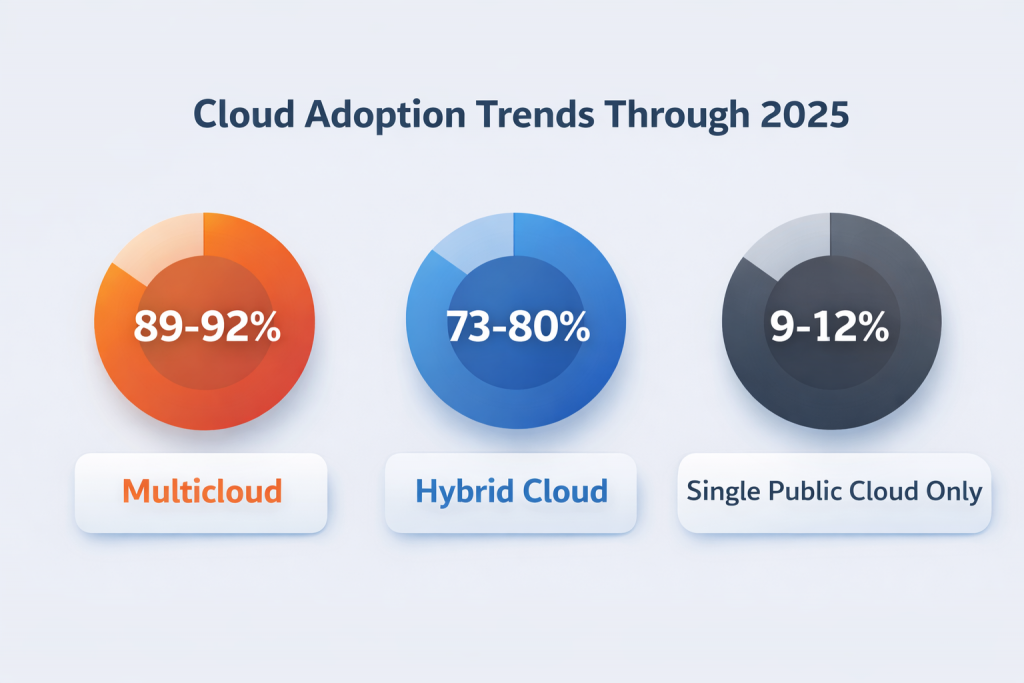
- Hybrid Cloud refers to a setup where part of your IT runs on-premises and part runs in a public cloud, working together as a single environment.
- Multi-Cloud means using cloud services from more than one public cloud provider (for example Oracle Cloud plus Azure or AWS) to match specific workloads to the best platform.
These are not fluffy buzzwords. They reflect the reality of modern enterprises balancing innovation with risk, performance, and cost.
Why This Approach Is Winning
1. Operational Flexibility Without Compromise
Not all workloads are equal. Some must remain close to home for performance or regulatory reasons. Others benefit from the agility and scale of a hyperscaler.
- Hybrid allows sensitive data to stay secure on-premises while non-critical functions scale in the cloud.
- Multi-cloud enables a “best-of-breed” approach, ensuring you use the right tool for the job rather than forcing every workload into a single provider’s stack.
From a C-suite perspective, this is about putting the right tool on the right job — not one tool on every job.
2. Economic Control and Risk Mitigation
Single-cloud reliance can create hidden risks:
- Vendor lock-in with pricing leverage.
- Outage risk concentrated on one provider.
- Limited geographic or compliance options.
Hybrid and multi-cloud reduce these risks by spreading workloads across platforms and locations. Performance bottlenecks or failures in one service don’t derail your entire business.
Economically, you gain:
- Better cost predictability by allocating predictable workloads on-premises or in lower-cost environments.
- The option to exploit competitive pricing across cloud vendors.
- Fewer surprises in spend growth.
3. Modernization With Continuity
Enterprises with long-running on-premises estates face a tough choice: rip-and-replace, or modernize incrementally?
Hybrid cloud lets you modernize without disruption. You connect your existing data center with cloud services using secure private networks and integrated tools, so apps continue working while gaining cloud capabilities like scalability and analytics.
This is a big deal for organizations that cannot afford big bang migrations — like finance, healthcare, or regulated industries.
4. Better Data Governance and Compliance
Data residency, privacy, and legal requirements are not going away. Hybrid architectures let companies keep sensitive data on-premises or in selected regions, while still taking advantage of public cloud capabilities where appropriate.
Multi-cloud strengthens this by providing choice: some providers have stronger regional presence or compliance certifications that fit specific market needs.
Where It Gets Hard: Management, Orchestration and Interoperability
This is the part that separates vision from execution.
- Governance becomes harder when policies must span multiple environments.
- Orchestration requires consistent tooling and visibility across clouds.
- Interoperability challenges emerge when applications need to move or share data between providers without redesign.
These are operational, not theoretical, problems — and they are why many companies hesitate before committing fully to hybrid or multi-cloud.
How Oracle Positions Hybrid and Multi-Cloud for Business Outcomes
Oracle has invested in solutions that reduce friction for enterprises adopting hybrid and multi-cloud:
- Fast private connections between on-premises networks and OCI regions to preserve performance and security. (oracle.com)
- Integrated services that let you run Oracle databases inside partner clouds with low latency and managed connectivity. (oracle.com)
- Management and observability tools that unify operational insights across environments. (docs.oracle.com)
This makes hybrid and multi-cloud less about “multiple silos” and more about a cohesive platform that serves business goals.
Single Cloud vs Hybrid/Multi-Cloud: A Practical Comparison
| Aspect | Single Public Cloud | Hybrid / Multi Cloud |
|---|---|---|
| Vendor Lock in | High | Lower |
| Compliance Flexibility | Medium | High |
| Cost Optimization | Limited | Strong |
| Performance Tuning | Provider dependent | Best fit per workload |
| Negotiation Power | Low over time | Higher due to vendor choice |
| Business Continuity | Tied to one provider | Distributed and more resilient |
| Long term Strategy | Rigid | Flexible and future proof |
Final Thought: Strategy First, Tools Second
For leaders, the choice isn’t about lining up the coolest tech. It’s about aligning cloud strategy with business priorities — risk tolerance, regulatory obligations, operational continuity, and cost discipline.
Hybrid and multi-cloud are not trendy buzzwords. They let companies scale with control, innovate without disruption, and protect what matters most. And with platforms like Oracle OCI building bridges rather than fences between environments, this model becomes not just practical, but strategic.